
SEUNwater
Learning The System Before Designing For It.
SEUNwater was built around a complicated problem: making water infrastructure more proactive instead of waiting for something to fail.
The early system focused on using IoT technology to continuously monitor water conditions across large facilities and infrastructure systems. Depending on the use case, that meant understanding measurements such as water quality, pressure, flow, temperature, conductivity, turbidity, dissolved oxygen, pH, and other sensor data — then figuring out how that information could become useful to the people responsible for maintaining the system.
I did not approach this as a surface-level technology brand.
I went deep into the subject matter so I could help shape the product and communicate it responsibly.
Research Became Part Of The Job.
My research stretched across hospital infrastructure, HVAC and closed-loop water systems, municipal water utilities, nitrate and arsenic monitoring, water loss, sensors, IoT, data systems, and global water-management challenges.
I studied how different organizations monitored water, where manual testing created gaps, what small municipalities were working with compared with larger utilities, and how the product might need to adapt across very different environments. Later work explored continuous monitoring of quality, pressure, and flow, including specific use cases around dangerous nitrate levels and other water-quality concerns.
The research also expanded far beyond one region. I was looking at municipalities, infrastructure programs, hospitals, water operators, and potential applications across the United States and international markets.
The more technical the project became, the more important translation became.
Product, Engineering And Experience Had To Connect.
My role touched the product itself, not just how it was presented.
I worked across design direction, engineering support, project management, UX, product definition, technical documentation, research, website development, presentations, manuals, video, and brand communication.
One of the early team decks literally listed my role as Design Director, Engineer, Project Manager.
That work meant understanding how sensors, probes, power, hardware, and software fit together well enough to make informed decisions around the physical system and the experience around it. Early product development included components for conductivity, turbidity, dissolved oxygen, pH, temperature, Raspberry Pi and Arduino-based hardware, calibration systems, and supporting circuitry.
I worked closely with the technical team rather than pretending design and engineering were separate worlds. My job was often to connect what the system measured, why it mattered, who needed the information, and how that information should be experienced and explained.
Making Infrastructure Understandable.
SEUNwater had to make sense to very different audiences.
A water operator needed to understand monitoring and response.
A hospital or facility needed to understand risk and infrastructure.
A municipality needed to understand affordability and continuous surveillance.
An investor needed to understand the market, product, scalability, and business model.
A technical partner needed enough specificity to understand how the system actually worked.
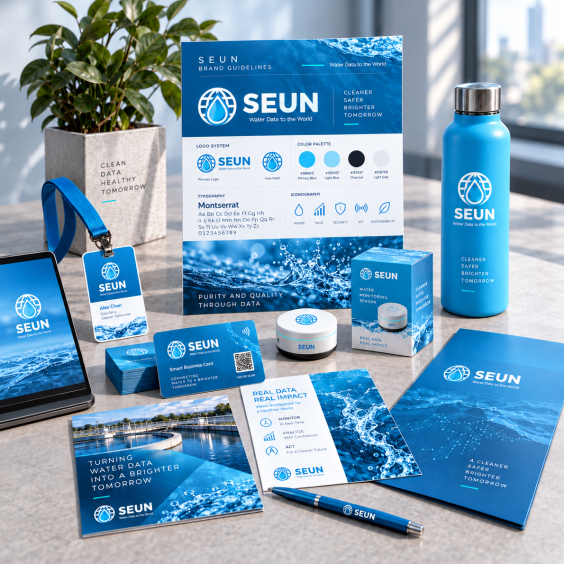
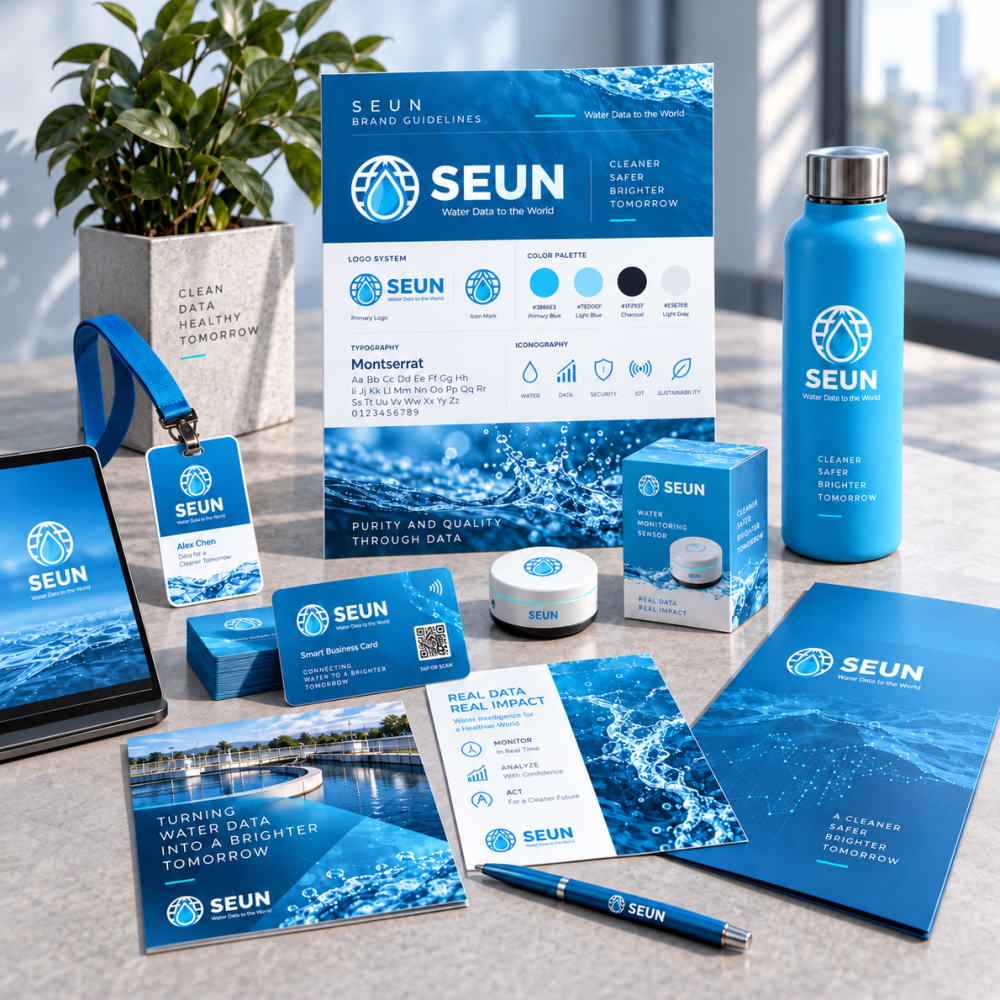
So I built communication systems around the technology — investor presentations, product materials, manuals, diagrams, website content, visual systems, videos, and explanations that could move between highly technical detail and a much simpler business story.
That became one of the most important parts of my role: taking complicated infrastructure and making it understandable without stripping away what made it technically meaningful.
From Hospitals To Municipal Water.
The scope of SEUNwater evolved significantly over time.
Earlier work centered heavily on large facilities and hospital HVAC systems, including continuous monitoring designed to help teams identify water-condition problems before they became expensive infrastructure failures.
Later positioning expanded further into drinking-water systems and municipalities, with the product framed around continuous monitoring of water quality, pressure, flow, water loss, nitrate concerns, and utility infrastructure for communities of different sizes.
That evolution meant continuously revisiting the product story, business model, user needs, research, and materials as the opportunity became clearer.
Built Around A Very Technical Problem.
SEUNwater is one of the projects that best shows the range of what I mean when I say I work across systems.
I was not simply handed finished technology and asked to make it attractive.
I researched the problem, helped shape the product, worked alongside engineering, managed pieces of the project, built the brand and digital experience around it, created technical and investor communications, and translated a highly specialized subject for everyone from infrastructure professionals to potential partners and investors.
A significant amount of the engineering documentation, manuals, and internal presentation material cannot be shown publicly, so this portfolio includes selected non-confidential work alongside the live website and product video.
The visible work is only part of the project. The real job was understanding the system well enough to help build and explain it.
Turning Complexity Into Something People Can Use.
SEUNwater required me to move comfortably between research, engineering, design, technology, infrastructure, business, and communication.
I learned enough about an unfamiliar and highly technical world to contribute meaningfully inside it — then built the brand, digital experience, documentation, and communication systems that made that complexity easier for everyone else to understand.
Explore The Finished Work: